AUSTIN US
AUSTIN
HomeRoadwayEstabilización de suelos para carreteras

Soil Stabilization for Roads in Austin: Laboratory Testing & Design Support

Rigorous testing. Clear reporting.

LEARN MORE

For road construction in Austin, the applicable standard is AASHTO T-99 (Standard Proctor) and AASHTO T-180 (Modified Proctor) for compaction control, alongside ASTM D4318 for Atterberg limits on the local clay. Austin sits on a thick layer of Taylor clay, which has a high plasticity index, so the compaction curve shifts depending on whether you treat it with lime or cement. Before we set the mix design, we always run a subgrade soil evaluation to classify the material and measure the pH and sulfate content. That step avoids the risk of a sulfate-induced heave that would break the road base within two years.
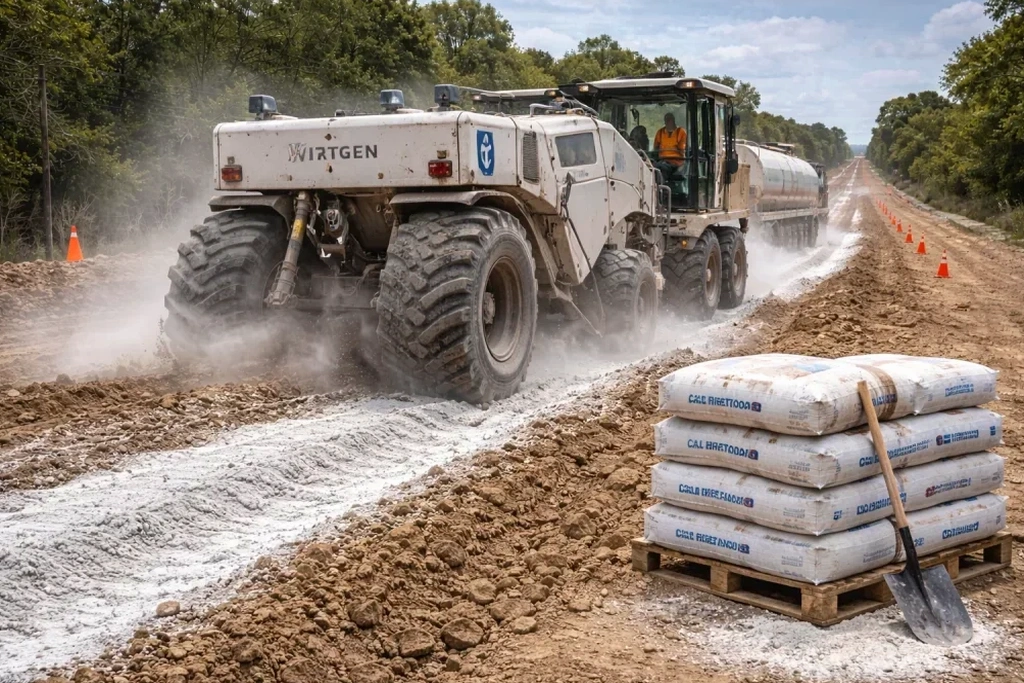
Illustrative image of Soil stabilization for roads in Austin
On Austin clay, a 2% lime pretreatment followed by 4% cement can reduce the plasticity index from 45 to under 15.

Our service areas

This service complements our laboratory testing work for a complete project analysis.

Process overview

The difference between treating a road base in the Blackland Prairie south of the Colorado River versus the sandy alluvium near the Edwards Plateau is huge. Southwest Austin, around Oak Hill, has gravelly loam that responds well to cement stabilization, but the same dosage applied to the clay in the East Side will cause excessive shrinkage. We run a full suite of wet-dry durability tests and unconfined compressive strength tests to find the optimum binder content. For the clay sections, we often recommend lime pretreatment first, followed by cement. This two-stage approach is something we learned from years of field trials here. We also cross-check the plasticity index reduction with a density test using the sand cone to verify field compaction meets the target.
Technical reference — Austin

Local context

A mistake we see frequently in Austin is skipping the sulfate test before mixing lime into the subgrade. When the sulfate content exceeds 3,000 ppm, the lime reacts to form ettringite, which expands and cracks the road surface. A contractor on an SH-71 frontage road learned this the hard way after spending $80,000 on a section that had to be ripped and replaced within 18 months. We always run the Tex-620-J sulfate analysis on every soil sample before recommending any chemical stabilizer. That single test saves the project from a costly failure.

Need a geotechnical assessment?

Reply within 24h.

Email: contact@geotechnicalengineering1.com

Relevant standards


AASHTO T-99 / T-180 (Compaction), ASTM D4318 (Atterberg Limits), ASTM D559 / D560 (Durability), Tex-620-J (Sulfate Content)

Technical data

ParameterTypical value
Standard Proctor (AASHTO T-99)Max dry density and optimum moisture content
Modified Proctor (AASHTO T-180)Higher compactive effort for heavy traffic subgrades
Atterberg Limits (ASTM D4318)Liquid limit, plastic limit, plasticity index
Unconfined Compressive Strength (ASTM D2166)UCS at 7 and 28 days
Wet-Day Durability (ASTM D559)Weight loss after 12 wet-dry cycles
Sulfate Content (Tex-620-J)Critical for lime stabilization risk assessment

FAQ


What is the typical cost range for a soil stabilization mix design in Austin?

A standard mix design with four dosages, UCS testing, and durability cycles costs between US$770 and US$3,460 depending on the number of additives and curing days. We provide a firm quote after reviewing the soil type and project volume.

How long does the stabilization mix design take from sample delivery to report?

We typically need 14 to 21 calendar days. The 7-day and 28-day UCS curing periods set the timeline. If the project needs faster results, we can run accelerated protocols using 60°C oven curing, which reduces the turnaround to 10 days.

What is the difference between lime stabilization and cement stabilization for Austin clay?

Lime reacts with the clay minerals to reduce plasticity and improve workability, but it is slower to gain strength. Cement binds the soil particles faster and gives higher early strength, but it can cause cracking if the clay content is high. For Austin's Taylor clay, we often recommend a lime pre-treatment followed by a small cement addition to combine both benefits.

Location and service area

We serve projects across Austin.

Location and service area