AUSTIN US
AUSTIN
HomeSlopes & WallsActive and Passive Anchor Design in Austin | Geotechnical...

Active and Passive Anchor Design in Austin | Geotechnical Engineering

Rigorous testing. Clear reporting.

LEARN MORE

Austin's rapid growth over the past two decades has pushed development onto increasingly challenging terrain. The city's geology — a mix of expansive clay (especially the Taylor and Eagle Ford formations) and weathered limestone — demands careful ground control. For any excavation deeper than 5 feet, active or passive anchor systems become essential to resist lateral loads and prevent wall movement. In our experience, the key to a reliable anchor design in Austin lies in understanding the soil's moisture sensitivity and the rock's fracture patterns. That's why we always pair our anchor analysis with a geotechnical resistivity survey to map subsurface variability before finalizing anchor lengths and grout volumes.
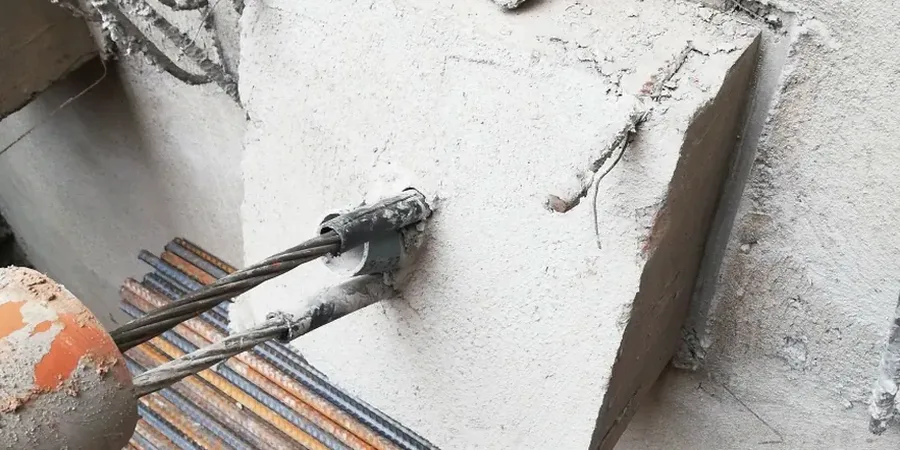
Illustrative image of Active/passive anchor design in Austin
In Austin's expansive clays, passive anchors can creep more than expected; active preloading is often the safer choice for permanent walls.

Our service areas

Process overview

When comparing anchor requirements in downtown Austin versus the suburban Hill Country west of Loop 360, the differences are stark. Downtown sites often sit on deep clay layers that creep under sustained load — here passive anchors (grouted or mechanical) work well because they mobilize resistance gradually as the soil moves. Out west, where limestone bedrock is shallow, active post-tensioned anchors are common to lock in preload immediately. Our design process follows these steps:
  • Field verification of soil/rock stratigraphy via test pits or coring
  • Pull-out capacity calculations using FHWA methods and site-specific bond stress values
  • Corrosion protection specification per IBC Section 1808
We also rely on direct shear testing of recovered soil samples to refine the interface friction angle used in anchor bond length estimates.
Technical reference — Austin

Local context

A 14-story condominium project in the Zilker neighborhood hit a snag during shoring. The contractor had installed passive tiebacks into what was mapped as stiff clay, but after three days of rain, the wall crept 1.5 inches. The issue? The clay had softened at the anchor bond zone, reducing pull-out capacity. We were called in to redesign the system with active anchors and a larger bond length. That experience taught us that Austin's clay cannot be treated as a uniform material — moisture infiltration can halve bond stress values. For any anchor design in Austin, we now recommend installing piezometers and monitoring groundwater fluctuations during the load-testing phase to capture worst-case wet conditions.

Need a geotechnical assessment?

Reply within 24h.

Email: contact@geotechnicalengineering1.com

Relevant standards


IBC 2018 Section 1808 (Foundations and Anchors), ASCE 7-16 Section 15.7 (Lateral Earth Pressures), FHWA-NHI-14-007 (Ground Anchors and Anchored Systems), ASTM D4435-13 (Anchor Pullout Testing)

Technical data

ParameterTypical value
Anchor type (active vs passive)Active: post-tensioned, preloaded; Passive: grouted tendon, not preloaded
Design bond stress (clay)15–30 psi (Taylor formation); 25–50 psi (Eagle Ford)
Design bond stress (limestone)80–150 psi (weathered); 150–250 psi (fresh)
Minimum anchor length (active)20 ft for 50-kip working load in clay
Factor of safety (IBC 2018)2.0 for temporary; 2.5 for permanent anchors
Proof load test level1.33 x design load (ASTM D4435/D4436)

FAQ


What is the difference between active and passive anchors in Austin's soil?

Active anchors are preloaded after installation, so they provide immediate resistance against lateral movement. Passive anchors develop resistance only after the soil or wall moves slightly, which is acceptable for temporary shoring but risky for permanent walls in Austin's expansive clays. We typically recommend active anchors for any structure that cannot tolerate even small displacements.

How much does anchor design and testing cost in Austin?

For a typical 50- to 100-anchor project in Austin, the total cost for design, testing, and observation ranges between US$1,040 and US$3,630. This includes field pull-out tests, proof load verification, and a final report. The range varies based on anchor depth, number of test anchors, and access conditions.

What bond stress values should I use for anchor design in the Taylor clay formation?

Based on our test data from multiple Austin projects, we recommend using 15–30 psi for temporary anchors and 20–40 psi for permanent anchors in the Taylor clay, but only after verifying with at least two field pull-out tests. The lower bound accounts for wet-season conditions when the clay softens. Never use published generic values without local calibration.

Location and service area

We serve projects across Austin.

Location and service area