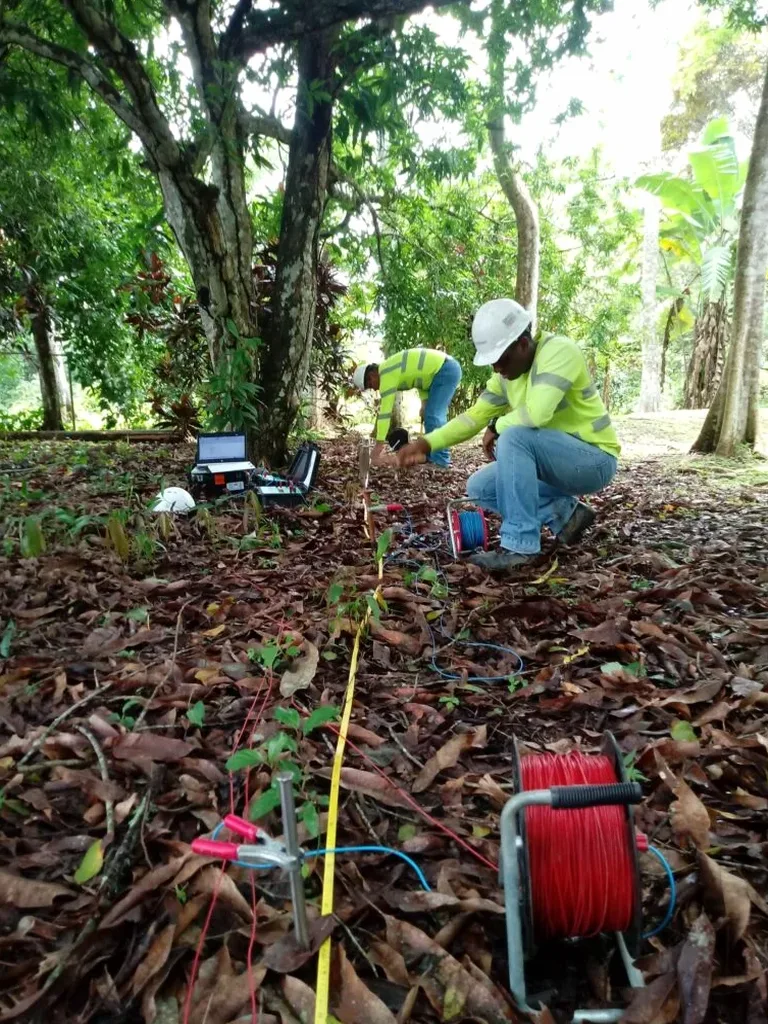
Seismic engineering in Austin represents a specialized discipline addressing the unique geological and structural challenges posed by the Balcones Fault Zone, which runs directly through the heart of Central Texas. While Austin is not traditionally associated with the high-magnitude earthquakes common to the West Coast, the city's proximity to this ancient fault system, combined with its rapid urban expansion, demands a proactive approach to seismic resilience. This category encompasses the comprehensive assessment, design, and mitigation strategies necessary to protect infrastructure, ranging from downtown high-rises to critical utility networks, against both natural tectonic activity and induced seismicity potentially linked to regional resource extraction. Understanding these risks is not merely an academic exercise but a fundamental requirement for developers, architects, and municipal planners committed to safeguarding Austin's built environment and its vibrant community.
The local geology of Austin is dominated by the Balcones Escarpment, a topographic and structural feature characterized by en echelon normal faults trending northeast-southwest. This geological setting creates a heterogeneous subsurface of interbedded limestone, chalk, and marl formations from the Cretaceous period, which can amplify seismic waves unpredictably. The weathered and karstic nature of the Edwards Limestone, in particular, introduces significant variables in wave propagation that demand detailed site response analysis to accurately predict how ground motion will behave at specific locations. These conditions differ markedly from the uniform bedrock assumptions often used in other regions, making localized, Austin-specific geotechnical investigations not just best practice but an ethical imperative for any significant construction project.
Regulatory compliance in Austin is governed by the International Building Code (IBC) as adopted by the City of Austin, which references ASCE 7 for seismic design parameters. Although the city falls into a moderate Seismic Design Category (typically B or C), the presence of Site Class D and even Site Class E soils in the alluvial plains east of the escarpment can trigger higher design forces and mandatory ground motion hazard analysis per Chapter 21 of ASCE 7. For essential facilities such as hospitals, fire stations, and emergency operations centers, the Texas Department of Licensing and Regulation enforces stricter Texas Administrative Code provisions that often require a more rigorous seismic evaluation, ensuring operational continuity immediately following a design-level event.
The types of projects requiring advanced seismic works are diverse and expanding. High-density residential and commercial towers penetrating the Austin skyline necessitate performance-based designs that often incorporate base isolation seismic design to decouple superstructures from ground motion. Equally critical are linear infrastructure projects like the Project Connect transit system, which crosses multiple fault traces and demands a corridor-wide seismic microzonation to delineate hazard levels and optimize tunnel and bridge designs. Furthermore, the preservation and retrofit of historic landmarks, from the Texas State Capitol to the iconic Congress Avenue Bridge, require sensitive yet robust structural interventions that respect architectural heritage while meeting modern life-safety standards. Our approach integrates advanced numerical modeling with a deep understanding of the Balcones Fault Zone's paleoseismic history to deliver solutions that are both technically sound and contextually appropriate for Austin's unique landscape.
Yes, Austin faces a credible seismic risk from the Balcones Fault Zone, an intraplate fault system capable of producing moderate earthquakes up to a moment magnitude of 6.0. While recurrence intervals are long, the combination of a growing urban density, vulnerable karst geology, and potential for induced seismicity from human activities makes the risk significant enough to warrant rigorous seismic design and mitigation under current building codes.
Austin's design approach focuses on moderate shaking over a longer duration, influenced by the unique site amplification effects of its limestone and alluvial soils, rather than the high-frequency, high-acceleration motions typical of California's strike-slip boundaries. This requires a site-specific response analysis per ASCE 7 Chapter 21 more frequently, as default code spectra may not capture the basin edge effects and topographic amplification common along the Balcones Escarpment.
A seismic microzonation study is typically required for large-scale, multi-structure developments or critical linear infrastructure like light rail lines and major utility corridors that traverse varied geological units. It is essential when a project crosses mapped fault traces or transitions between Site Class B rock on the Edwards Plateau and Site Class D or E soils in the Blackland Prairie, to spatially map ground motion amplification, liquefaction potential, and slope instability hazards.
The local geology can significantly increase complexity and cost when a site investigation reveals deep, soft clay deposits east of I-35 or a direct fault crossing, which may necessitate a shift from conventional strengthening to more advanced techniques like base isolation. A detailed site response analysis often uncovers higher site coefficients than code-defaults, leading to increased base shear demands and more extensive structural modifications to achieve the desired performance level.