AUSTIN US
AUSTIN
HomeLaboratorySoil Mechanics Study

Soil Mechanics Study in Austin: Foundation Design Under IBC & ASCE 7

Rigorous testing. Clear reporting.

LEARN MORE

In Austin, the International Building Code (IBC) and ASCE 7-22 set the minimum requirements for geotechnical investigations before any structural design. Our soil mechanics study addresses these codes head-on, focusing on the challenging geology of Central Texas. The city sits atop the Balcones Fault Zone, where Cretaceous limestone and marl interbed with deep clay layers. That means a standard borehole program won't cut it — we tailor each investigation to the specific site conditions. From residential slabs on expansive soils to multi-story buildings on karst-prone limestone, we deliver a soil mechanics study that meets both code and practical needs. We run laboratory tests including triaxial compression (ASTM D4767) and consolidation (ASTM D2435) to provide design parameters your structural engineer can trust.
Illustrative image of Soil mechanics study in Austin
A soil mechanics study in Austin must capture the swelling potential of CH clays and the karst voids in the underlying limestone — both can compromise a foundation.

Our service areas

Process overview

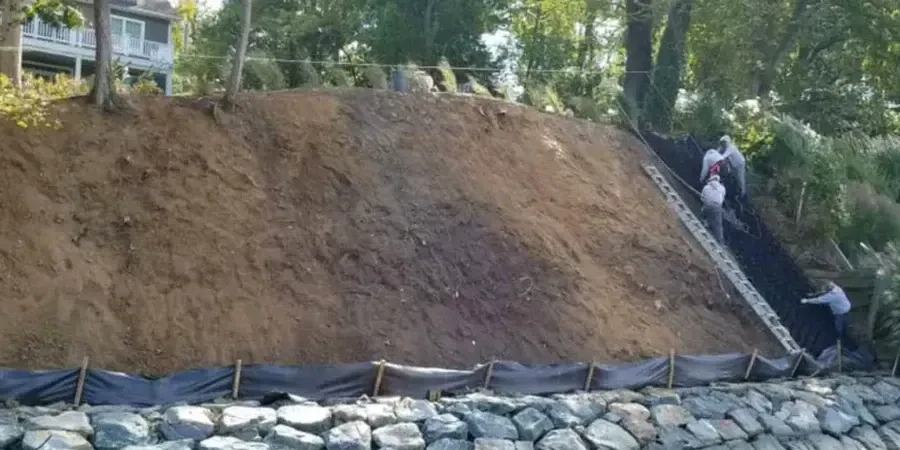
Austin's climate swings from drought to torrential rain, which directly impacts soil behavior. The high-plasticity clays (CH) common in areas like South Austin and the Edwards Plateau expand when wet and shrink during dry spells. A proper soil mechanics study in Austin must capture these volume changes through Atterberg limits (ASTM D4318) and swell-consolidation tests. We also assess collapse potential in the alluvial deposits near the Colorado River. For deep foundations, we pair our investigation with a georradar survey to map solution cavities in the limestone bedrock — a real risk in Westlake and the Hill Country. When the project involves cut slopes, we integrate a slope stability analysis to evaluate failure surfaces in the weathered clay-shale layers. Every test is run in our ISO 17025-accredited lab, with strict chain-of-custody protocols.
Technical reference — Austin

Local context

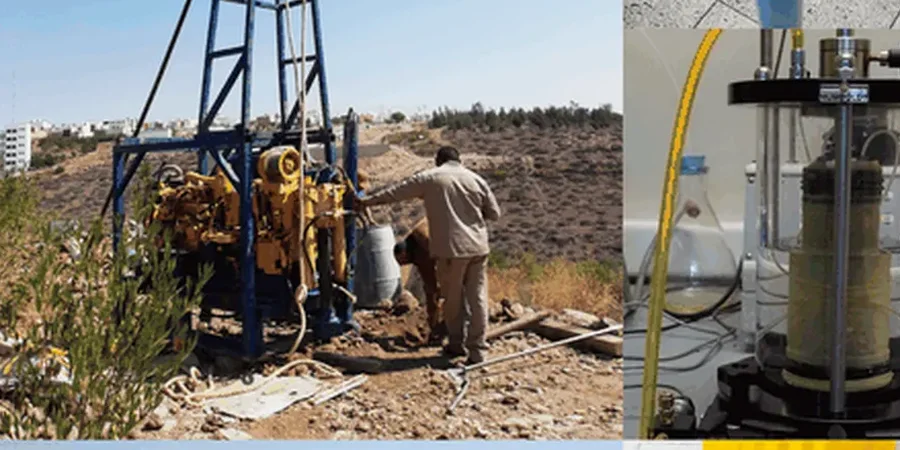
Our field crew operates a truck-mounted CME 75 drill rig outfitted with hollow-stem augers and wireline core barrels. In Austin, the biggest challenge is drilling through the interbedded clay and limestone stringers without losing sample recovery. When we hit solution cavities in the Edwards Limestone, we switch to mud rotary to stabilize the borehole. We also perform standard penetration tests (SPT) at 1.5 m intervals per ASTM D1586, collecting split-spoon samples for lab classification. The rig carries a 140-pound hammer with automatic trip release to ensure consistent energy delivery. Our team logs every run in real-time using a tablet-based field data system, so the soil mechanics study in Austin is backed by traceable, high-resolution data from the very first foot.

Need a geotechnical assessment?

Reply within 24h.

Email: contact@geotechnicalengineering1.com

Relevant standards


IBC 2021 (Chapter 18 – Soils and Foundations), ASCE 7-22 (Chapter 20 – Site Classification for Seismic Design), ASTM D1586-18 (Standard Test Method for SPT), ASTM D2487-17 (Unified Soil Classification System)

Technical data

ParameterTypical value
Unconfined Compressive Strength (qu)0.5 – 4.0 kg/cm²
Swelling Pressure (odometer)20 – 120 kPa
SPT N-value (clay layers)4 – 15 blows/ft
Liquid Limit (LL)45 – 75%
Collapse Potential (CP)1 – 5% (moderate risk)
Depth to Bedrock (limestone)2 – 15 m

Visual overview

FAQ


How many boreholes are required for a soil mechanics study in Austin?

For a typical single-family lot, we drill 3 to 4 boreholes to 8-10 m depth. For commercial buildings, the number depends on the footprint and column loads — usually 1 borehole per 200 m² of building area, with a minimum of 4. The IBC requires at least one boring per 200 m² for seismic site classification.

What is the typical cost range for a soil mechanics study in Austin?

For a standard residential lot with 3 boreholes and full laboratory testing, the range is between $3,100 and $5,080. Commercial projects with more boreholes and deeper drilling can go higher. We provide a firm quote after reviewing the site plan and structural loads.

How long does it take to get the final geotechnical report?

Fieldwork takes 1 to 2 days for a residential lot. Laboratory testing (consolidation, triaxial, swell) adds 7 to 10 business days. The full report, including calculations and foundation recommendations, is delivered within 2 weeks from the start of drilling.

Does the study include liquefaction analysis for Austin soils?

Yes, when the site is located in a seismic zone (Austin is in IBC Seismic Design Category C or D depending on the zip code). We evaluate liquefaction susceptibility using the SPT-based method from Youd et al. (2001) and NCEER guidelines. The report states whether the site requires mitigation.

Location and service area

We serve projects across Austin.

Location and service area