AUSTIN US
AUSTIN
HomeSlopes & WallsSheet Pile Wall Design in Austin, TX

Sheet Pile Wall Design in Austin, TX

Rigorous testing. Clear reporting.

LEARN MORE

Austin's geology is deceptive. One block you have competent limestone, the next you are in soft Taylor Marl or alluvial clay along the creeks. We have seen projects stall because the sheet pile wall design assumed uniform ground conditions. That is a costly mistake. Our approach starts with a site-specific soil profile using SPT and Atterberg data. Before evaluating the wall embedment depth we often run a georradar-gpr survey to map buried rock pinnacles. This prevents driving piles into unexpected refusal or, worse, voids. We also cross-check groundwater levels against seasonal creek stages. The design must account for the perched water zones common in the Austin Chalk formation. Every wall we design is anchored on real soil parameters, not textbook assumptions.
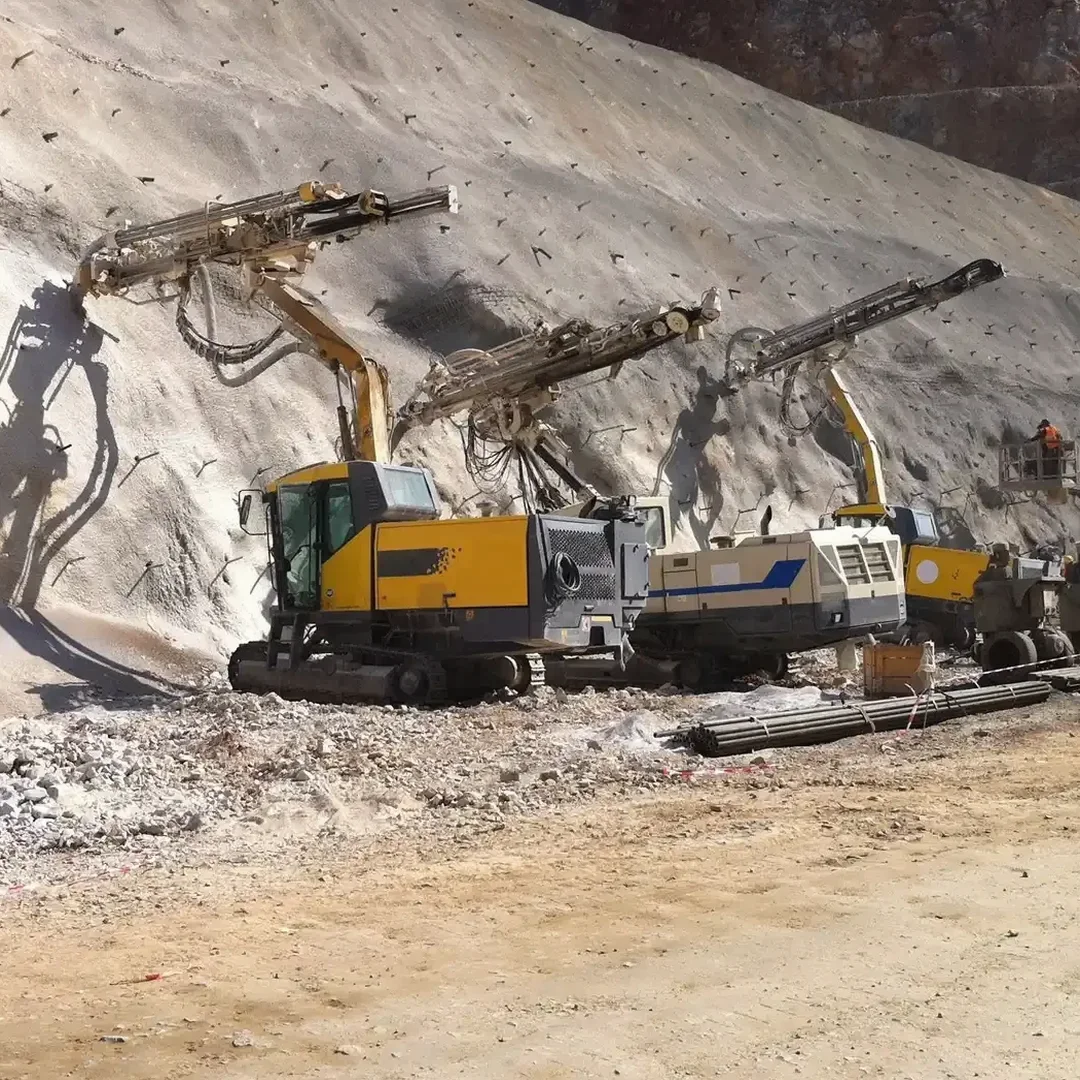
Illustrative image of Sheet pile wall design in Austin
We design sheet pile walls based on measured soil strength, not default values. One borehole can save you a failed excavation wall.

Our service areas

Process overview

The subsurface profile beneath an Austin sheet pile wall typically includes stiff to very stiff clay over weathered limestone. The clay layers can exhibit high plasticity, so we measure Atterberg limits and residual shear strength. We model the wall as a flexible retaining system in deep clay, but as a rigid cantilever in shallow rock. For anchored walls we verify the tieback capacity through field proof tests. The ensayo-triaxial CU test gives us the undrained strength profile needed for soft clay layers. We use this data in finite-difference software to compute bending moments and deflection at each stage. Key design parameters we determine in the lab include:
  • Effective cohesion (c') and friction angle (φ') from direct shear or triaxial
  • Unit weight and moisture content for buoyant pressure calculations
  • Coefficient of horizontal subgrade reaction (k_h) in clay and rock
  • Corrosion potential of the groundwater for steel pile durability
Technical reference — Austin

Local context

A common error in Austin is assuming the limestone layer is continuous and competent. Weathering zones and solution cavities are frequent along the Balcones Fault Zone. If the sheet pile tip encounters a soft clay seam within the rock, the wall loses lateral support. We have seen tieback anchors fail because the bond zone was in a weathered zone instead of sound rock. Another risk is hydrostatic pressure buildup behind the wall during heavy rain events. Without proper weep holes or drainage, the lateral load can double. We always include a drainage layer design and check the wall for rapid drawdown conditions. Ignoring these local risks leads to wall leaning or collapse.

Need a geotechnical assessment?

Reply within 24h.

Email: contact@geotechnicalengineering1.com

Relevant standards


IBC 2021 (Chapter 18 – Soils and Foundations), ASCE 7-22 (Earth Pressures and Retaining Structures), ASTM D1586-18 (Standard Test Method for SPT), ASTM D4318-17 (Standard Test Methods for Liquid Limit, Plastic Limit, and Plasticity Index of Soils), FHWA-NHI-05-039 (Earth Retaining Structures Manual)

Technical data

ParameterTypical value
Soil typeStiff clay (CH), weathered limestone, alluvial silts
Design friction angle (clay)0-28 degrees depending on plasticity index
Max bending momentUp to 450 kN-m/m for deep excavations
Corrosion rate (steel)0.05-0.15 mm/year in Austin groundwater
Safety factor (overturning)1.5 to 2.0 per IBC 2021
Deflection limitH/200 at service load
Tieback capacity200-600 kN per strand, verified by proof test

FAQ


What soil conditions in Austin most affect sheet pile wall design?

The variability between stiff Taylor clay and weathered Austin Chalk is the main challenge. Clay layers can swell and shrink, while the limestone may have solution cavities. We always require a minimum of two boreholes per wall alignment to capture this variation.

How deep should a sheet pile wall be embedded in Austin clay?

Embedment depth depends on the retained height and clay strength. For a 5 m excavation in stiff clay, we typically design for 3-4 m embedment. We use the undrained shear strength from triaxial tests to compute the passive resistance.

What is the typical cost range for a sheet pile wall design in Austin?

The design and geotechnical investigation for a standard sheet pile wall in Austin ranges between US$1.590 and US$5.140. This includes field exploration, lab testing, modeling, and a sealed design report. Complex walls with tiebacks or deep embedment may exceed this range.

Do you include drainage design in the sheet pile wall package?

Yes. We always design a drainage system behind the wall to prevent hydrostatic pressure buildup. This includes weep holes, filter fabric, and a perforated pipe at the base. We check the wall for both drained and undrained conditions.

Location and service area

We serve projects across Austin.

Location and service area