AUSTIN US
AUSTIN
HomeLaboratoryPermeabilidad en laboratorio (carga variable/constante)

Laboratory Permeability Test (Falling/Constant Head) in Austin

Rigorous testing. Clear reporting.

LEARN MORE

A permeameter cell stands on the bench, water slowly saturating a compacted sample of Austin clay. We run both falling head and constant head tests depending on soil type. For the expansive clays found across the Texas Hill Country, falling head is the standard. Clean sands from the Colorado River terraces allow constant head setups. Each test measures hydraulic conductivity in cm/s, a value that directly informs drainage design and slope stability. In Austin, where the Balcones Fault Zone creates complex stratigraphy, knowing how water moves through the soil profile prevents costly missteps. Our lab follows ASTM D2434 for coarse materials and ASTM D5084 for fine-grained specimens. Before any permeability run, we often coordinate with a full study of Atterberg limits to classify the soil's plasticity and understand its swelling potential.
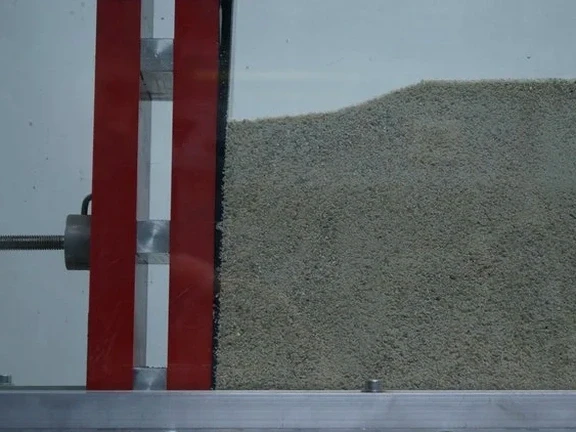
Illustrative image of Laboratory permeability test (falling/constant head) in Austin
Austin's Balcones Fault Zone creates a permeability contrast of three orders of magnitude in less than a mile.

Our service areas

Process overview

ASTM D5084 governs our falling head tests on Austin's high-plasticity clays. The constant head method follows ASTM D2434 for the sandy lenses found near Onion Creek. Why does this matter? Because the permeability of Austin's Eagle Ford Shale can drop to 10⁻⁷ cm/s when saturated, while alluvial sands along the Colorado River reach 10⁻² cm/s. That three-order-of-magnitude spread changes everything for foundation and drainage design. Our technicians trim specimens carefully to preserve natural structure. Then we apply backpressure to achieve full saturation before the actual measurement. Results are reported at 20°C with correction for water viscosity. For projects requiring in-situ correlation, we complement the lab data with a field permeability test to compare laboratory and field hydraulic conductivities.
Technical reference — Austin

Local context

A common mistake we see in local projects: assuming permeability from grain size alone. Engineers look at a sieve curve and guess the k-value. That shortcut ignores the effect of compaction, fabric, and macropores. In Austin's clay soils, desiccation cracks can create preferential flow paths — a laboratory test on an intact specimen catches that. Another error: testing only one sample. Austin's geology changes from the Edwards Plateau limestone to the Blackland Prairie clays within blocks. A single permeability test cannot represent the site. Our laboratory permeability tests account for these local variations by testing multiple specimens from different strata and depths.

Need a geotechnical assessment?

Reply within 24h.

Email: contact@geotechnicalengineering1.com

Relevant standards


ASTM D5084-16a (Falling head permeability of fine-grained soils), ASTM D2434-19 (Constant head permeability of granular soils), ASTM D854-14 (Specific gravity — used for void ratio calculations in permeability)

Technical data

ParameterTypical value
Test methodFalling head (ASTM D5084) / Constant head (ASTM D2434)
Sample diameter50 mm or 100 mm (undisturbed or remolded)
Hydraulic gradient2 to 30 depending on soil type
BackpressureUp to 500 kPa for full saturation
Temperature correctionReported at 20 °C per ASTM guidelines
Result range typical for Austin10⁻³ to 10⁻⁸ cm/s (sand to clay)

FAQ


What is the difference between falling head and constant head laboratory permeability tests?

Falling head is used for fine-grained soils like Austin's clays, where water flows slowly through the specimen and the head drops measurably over time. Constant head is for sands and gravels, where a steady hydraulic gradient is maintained and flow rate is measured directly.

How much does a laboratory permeability test cost in Austin?

Typical pricing ranges between US$360 and US$680 per test, depending on method, number of specimens, and whether backpressure saturation is required. Contact us for a quote tailored to your project scope.

Why is laboratory permeability testing important for Austin construction projects?

Austin's geology includes expansive clays and variable alluvial deposits. Hydraulic conductivity values guide drainage design, retaining wall weep hole spacing, and slope stability analysis. Without lab data, water infiltration assumptions can lead to foundation heave or erosion failures.

Can you test remolded samples or only undisturbed ones?

We test both. Undisturbed specimens preserve natural fabric and fissures, which is critical for Austin's clay soils. Remolded specimens are used for compacted fill projects, where you need the permeability of the engineered material at a target density.

How long does a laboratory permeability test take?

A falling head test on clay can take 5 to 10 days due to the time needed for full saturation and steady flow. Constant head tests on sand typically complete in 2 to 3 days. Rush schedules are available for time-sensitive projects.

Location and service area

We serve projects across Austin.

Location and service area