AUSTIN US
AUSTIN
HomeFoundationsFoundations on Fill Analysis

Foundations on Fill Analysis in Austin – Engineered Solutions for Variable Soils

Rigorous testing. Clear reporting.

LEARN MORE

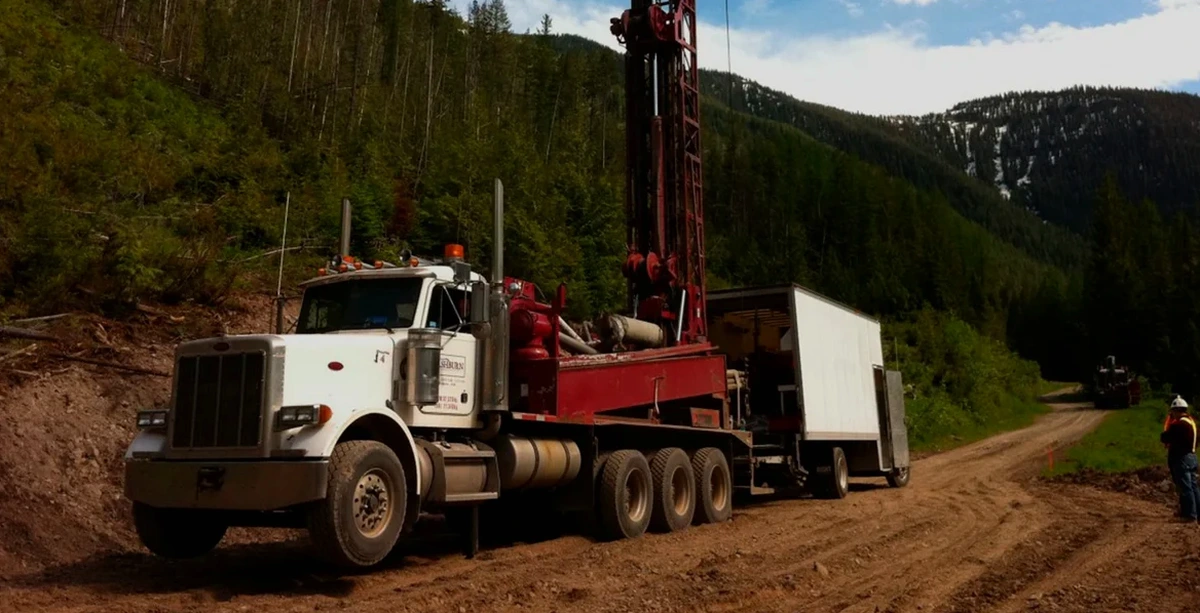
When a track loader or excavator cuts into a slope in the Texas Hill Country west of Austin, the contrast between competent limestone and loose, heterogeneous fill becomes immediately visible. Our team regularly observes fills composed of clayey sand with cobbles, construction debris, and even organic pockets — a direct consequence of the rapid grading that reshaped the city's subdivisions over the past two decades. The variability alone demands a structured approach to foundations on fill analysis before any footing is placed. We deploy dynamic cone penetrometers and plate load tests on-site to capture stiffness profiles in real time, then correlate those with lab results from undisturbed tube samples. The goal is to quantify both short-term settlement under structural loads and long-term creep or collapse upon wetting — a frequent concern in Austin's semi-arid climate where fills can be moisture-sensitive. This phase often integrates with a georradar survey to map buried utilities or undocumented fill boundaries, ensuring the investigation covers the full footprint.
Illustrative image of Foundations on fill (analysis) in Austin
Fill soils in Austin can settle 2 to 5 centimeters within the first year if collapse potential is not identified and mitigated during the investigation phase.

Our service areas

Process overview

A four-story apartment complex in East Austin recently required foundations on fill analysis after test pits revealed fill depths exceeding 4 meters in the former ravine that had been backfilled during site preparation. The approach combined several complementary methods:
  • Boreholes with SPT energy correction per ASTM D1586 to assess relative density and fines content in the fill matrix.
  • Laboratory collapse testing on remolded specimens at field moisture and under inundation, following ASTM D5333 procedures.
  • Numerical modeling using modulus values derived from plate load tests, calibrated against local experience with the Taylor Marl formation underlying the fill.
Each data set feeds into a settlement analysis that distinguishes between immediate elastic compression and time-dependent consolidation. When fills are deep or contain perched water, we recommend deep soil mixing to create competent columns through the fill into the underlying bedrock, or compaction grouting to densify loose zones without over-excavation. The result is a design parameter set that geotechnical engineers can use with confidence in Austin's mixed geology.
Technical reference — Austin

Local context

ASCE 7-22 and IBC 2021 require that structures on fill be designed for differential settlement, and in Austin the risk is amplified by the heterogeneous nature of urban fills — often containing cobbles, demolition rubble, and expansive clay lenses. A fill that appears competent in one borehole may hide a soft pocket just meters away. The collapse potential upon wetting is particularly dangerous because it can occur without warning after construction is complete. Our foundations on fill analysis includes a probabilistic assessment of differential settlement using Monte Carlo simulations, accounting for spatial variability observed in the field. We also evaluate liquefaction susceptibility in saturated sandy fills, referencing Youd-Idriss criteria from the NCEER workshop, because Austin's floodplains occasionally host loose saturated fills near creeks. Ignoring this analysis can lead to structural distress, cracked slabs, and costly retrofits within the first five years of occupancy.

Need a geotechnical assessment?

Reply within 24h.

Email: contact@geotechnicalengineering1.com

Visual overview


Relevant standards

ASTM D1586-18 (Standard Penetration Test), ASTM D5333-19 (Collapse Potential of Soils), ASCE 7-22 (Minimum Design Loads for Buildings, Chapter 12 – Seismic, Section 12.13 for fill), IBC 2021 Section 1804.6 (Fill and Backfill Requirements)

Technical data


ParameterTypical value
Fill thickness range0.5 – 8.0 m (typical for cut-and-fill subdivisions)
SPT N-value (uncorrected) in fill4 – 18 blows/300mm (loose to medium dense)
Collapse potential index (ASTM D5333)0.5 – 3.0% (moderate to severe)
Allowable bearing pressure (recommended)50 – 100 kPa after improvement
Modulus of subgrade reaction (k-value)10 – 30 MN/m³ (varies with density and moisture)

FAQ

How deep can fill soils be in Austin, and how does that affect foundation design?

Fill depths in Austin range from less than 1 meter in older subdivisions to more than 8 meters in modern cut-and-fill developments on the western edge of the city near the Balcones Escarpment. Deep fills require either Improvement (e.g., deep soil mixing or compaction grouting) or deep foundations (drilled shafts or driven piles) extending through the fill into competent bedrock or dense alluvium. Our analysis provides the specific thickness profile and the required foundation embedment depth.

What is the typical cost range for a foundations on fill analysis in Austin?

For a typical residential or small commercial project in Austin, the cost ranges between US$940 and US$2,400 depending on the number of borings, laboratory tests required, and the complexity of the fill profile. Larger sites or sites with deep, heterogeneous fills may fall at the higher end of this range due to additional sampling and numerical modeling.

What is collapse potential, and why is it important for fill soils in Austin?

Collapse potential refers to the sudden volume reduction that some fills undergo when they become saturated under load. In Austin, many fills are compacted dry of optimum to meet density targets, leaving them metastable. When irrigation, broken pipes, or heavy rainfall saturates the fill, it can collapse, causing differential settlement of the structure above. We measure this using double-oedometer tests per ASTM D5333 and classify the severity to determine if mitigation is needed.

Location and service area

We serve projects across Austin.

Location and service area