AUSTIN US
AUSTIN
HomeSlopes & WallsMSE (Mechanically Stabilized Earth) Wall Design

MSE (Mechanically Stabilized Earth) Wall Design in Austin

Rigorous testing. Clear reporting.

LEARN MORE

Austin sits at about 500 feet above sea level, and its soils are notoriously tricky. Expansive clay dominates much of the area, shifting volume with seasonal moisture. That movement puts direct pressure on any retaining structure. For MSE wall design in Austin, we account for the city's high plasticity index and deep active zones. A mechanically stabilized earth wall here must resist both lateral earth pressure and vertical swell forces. We integrate soil reinforcement with facing panels to create a flexible, durable system. Before any design, we run Atterberg limits tests to quantify clay behavior. That data feeds directly into our reinforcement layout and drainage planning.
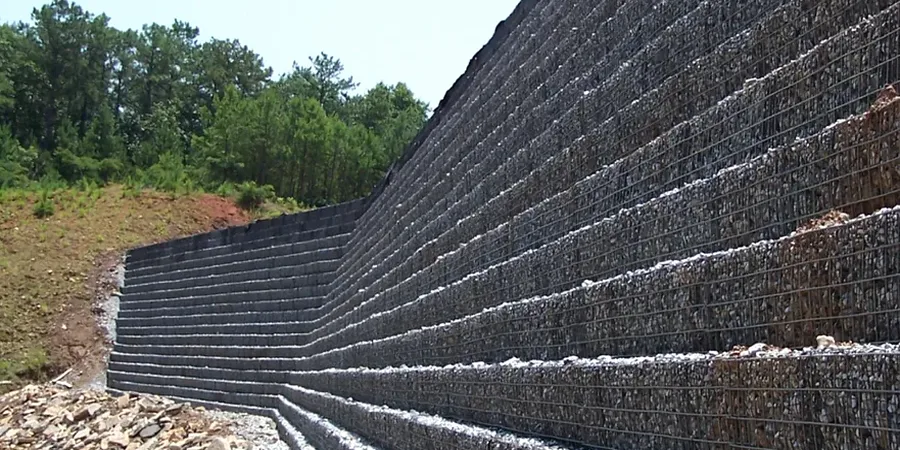
Illustrative image of MSE (Mechanically Stabilized Earth) wall design in Austin
Expansive clay in Austin means an MSE wall's reinforced zone must extend beyond the active depth to resist swell forces.

Our service areas

Process overview

Imagine a 15-foot-high slope behind a new commercial development off MoPac. The site has fat clay with a plasticity index over 40. Standard gravity walls would crack under the swell pressure. MSE wall design in Austin solves that by wrapping select granular backfill with high-strength geogrids. The facing can be precast panels or block, but the real work is in the reinforced zone. We follow AASHTO LRFD for internal stability and check pullout resistance. A key step is analyzing drainage; without it, water builds up behind the face. That's why we often pair MSE walls with a geotextile drainage system to keep pore pressures low. The result is a wall that moves with the soil without failing.
Technical reference — Austin

Local context

A wall built in the Hill Country west of Austin behaves nothing like one in the Blackland Prairie east of I-35. The western side has limestone and sandy clay, while the east has deep, fat clay that shrinks and swells. MSE wall design in Austin must match the soil profile. In the east, ignoring active zone depth means the reinforcement can be lifted by swelling clay. The facing panels then tilt or crack. We always sample at multiple depths and run consolidation tests to set the reinforced zone length. Missing that step leads to expensive litigation and repair.

Need a geotechnical assessment?

Reply within 24h.

Email: contact@geotechnicalengineering1.com

Relevant standards


AASHTO LRFD Bridge Design Specifications (9th Edition, 2020), ASTM D6638 (Geogrid Connection Strength), ASTM D5321 (Direct Shear for Geosynthetics), FHWA-NHI-10-024 (MSE Wall Design Guidelines)

Technical data

ParameterTypical value
Reinforcement Length0.7 x wall height (minimum)
Maximum Reinforcement Vertical Spacing24 inches
Facing TypePrecast concrete panels or modular block
Backfill Friction Angle≥ 34 degrees
Geogrid Long-Term Design Strength≥ 2,500 lb/ft
Drainage Layer Thickness12 inches (granular)

FAQ


How much does MSE wall design cost in Austin?

Typical design fees range from US$1,250 to US$4,600 depending on wall height, reinforcement length, and site complexity. Larger projects with multiple wall sections or difficult soils may cost more.

What soil conditions make MSE walls fail in Austin?

Expansive clay with a plasticity index above 50 can swell enough to lift the reinforcement grid. Poor drainage behind the wall also saturates the backfill, reducing friction and increasing lateral pressure. Both scenarios require deeper reinforcement zones and active drainage layers.

Can I use MSE walls for a residential retaining wall in Austin?

Yes, but only if the wall height exceeds 4 feet and the soil has moderate to low plasticity. For residential projects, we typically use modular block facing with geogrid reinforcement. We still run a site-specific design following AASHTO LRFD to avoid future movement.

Location and service area

We serve projects across Austin.

Location and service area