Foundation engineering in Austin demands a rigorous understanding of the region's unique geological and climatic challenges. This category encompasses the full spectrum of geotechnical works required to design, analyze, and verify foundation systems that perform reliably in Central Texas. From initial bearing capacity analysis to specialized solutions like micropile design, the discipline ensures structures remain stable despite expansive soils, fractured limestone, and periodic drought conditions. For property owners and developers, engaging a geotechnical specialist early in the project lifecycle mitigates risks of differential settlement, structural distress, and costly remedial work down the line.
Austin's geology is dominated by the Balcones Fault Zone, which creates a complex transition between the Edwards Plateau's limestone bedrock to the west and the Blackland Prairie's expansive clay soils to the east. Many sites feature interbedded layers of marl, shale, and weathered rock, often with variable weathering depths and hidden dissolution features. These conditions demand thorough subsurface investigation before selecting a foundation type. The highly plastic clays, in particular, undergo significant volume changes with moisture fluctuation, making a robust differential settlement analysis an essential step in the design process to anticipate and accommodate soil movement without compromising structural integrity.
Regulatory compliance in Austin is governed by the International Building Code (IBC) as adopted and amended by the City of Austin, alongside the Texas State Board of Professional Engineers' standards. A geotechnical report must conform to the requirements of the City of Austin's Environmental Criteria Manual and the American Society of Civil Engineers (ASCE) standards, including ASCE 7 for load combinations. For projects on problematic soils, the city often requires a foundations on fill analysis to certify that engineered fill is placed and compacted to mitigate settlement. Additionally, the Texas Section of the American Society of Civil Engineers provides local guidelines that influence practice, particularly regarding karst terrain and the design of foundations on expansive clays.
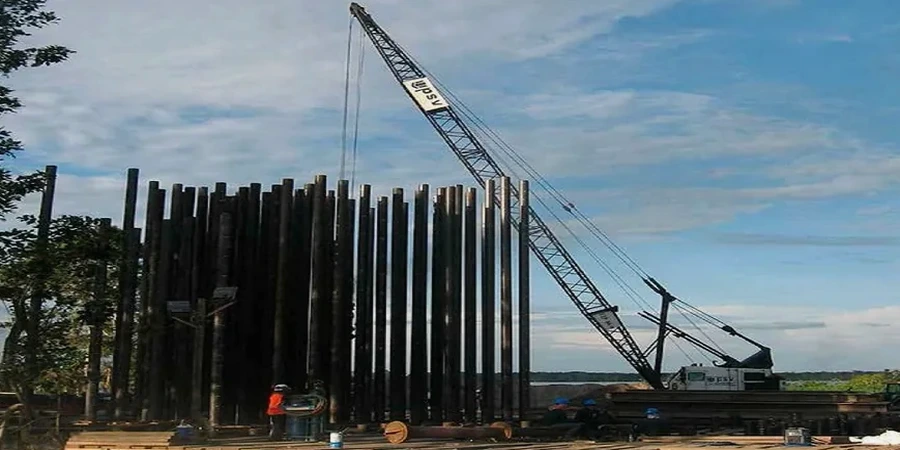
The types of projects requiring comprehensive foundation works are diverse, ranging from single-family residences on the expansive eastern plains to high-rise commercial towers in the dense urban core. Residential developments frequently benefit from a well-executed shallow foundation design, such as stiffened slabs or post-tensioned systems, calibrated to local soil reactivity. In contrast, infrastructure and larger commercial structures on variable or weak strata often necessitate deep foundation solutions. A pile foundation design may be required to transfer loads through unstable surficial soils to competent limestone bedrock, ensuring long-term performance and adherence to Austin's stringent building safety codes.
The predominant challenge is expansive clay soil, particularly in East Austin, which swells when wet and shrinks during drought, causing differential movement. This is addressed through geotechnical investigations to quantify soil plasticity and reactivity, followed by designs like post-tensioned slabs, moisture-conditioned fill, or deep piers that bypass the active zone to reach stable strata.
Deep foundations become necessary when near-surface soils lack adequate bearing capacity or are too compressible, often encountered in the Blackland Prairie or over karst features. They are also specified when structural loads are very high, requiring transfer to limestone bedrock, or when a site's fill depth makes shallow footings impractical due to excessive settlement potential.
Foundation design must comply with the City of Austin's adopted International Building Code and the Environmental Criteria Manual. Geotechnical reports are mandatory for most commercial projects and must follow ASCE standards. Specific provisions address construction on expansive soils and in the Edwards Aquifer Recharge Zone, where karst mitigation may be required.
The fault zone creates abrupt transitions between limestone and clay within a single site, leading to variable bearing capacity and settlement potential. This requires detailed subsurface exploration, often combining borings with geophysics, to map the rock profile. Foundations must then be designed to accommodate differential stiffness, typically using a combination of shallow and deep elements or a rigid mat slab.