AUSTIN US
AUSTIN
HomeFoundationsMicropile Design

Micropile Design in Austin – Engineered Solutions for Challenging Soils

Rigorous testing. Clear reporting.

LEARN MORE

A twelve-story mixed-use tower on South Congress Avenue required a foundation that could transfer 1,200 kips per column through 30 feet of expansive clay into the underlying Austin Chalk. Conventional drilled shafts were ruled out due to overhead clearance and vibration limits near historic buildings. We designed a micropile system using 9 5/8-inch casing, single-bar 60-ksi steel, and neat cement grout with a water-cement ratio of 0.45. Each pile was proof-tested to 200% of design load per ASTM D1143. Before finalizing the micropile design, we cross-checked the soil profile with a trial pit excavation to verify the top-of-rock elevation. The project was completed on schedule with zero adjacent settlement.
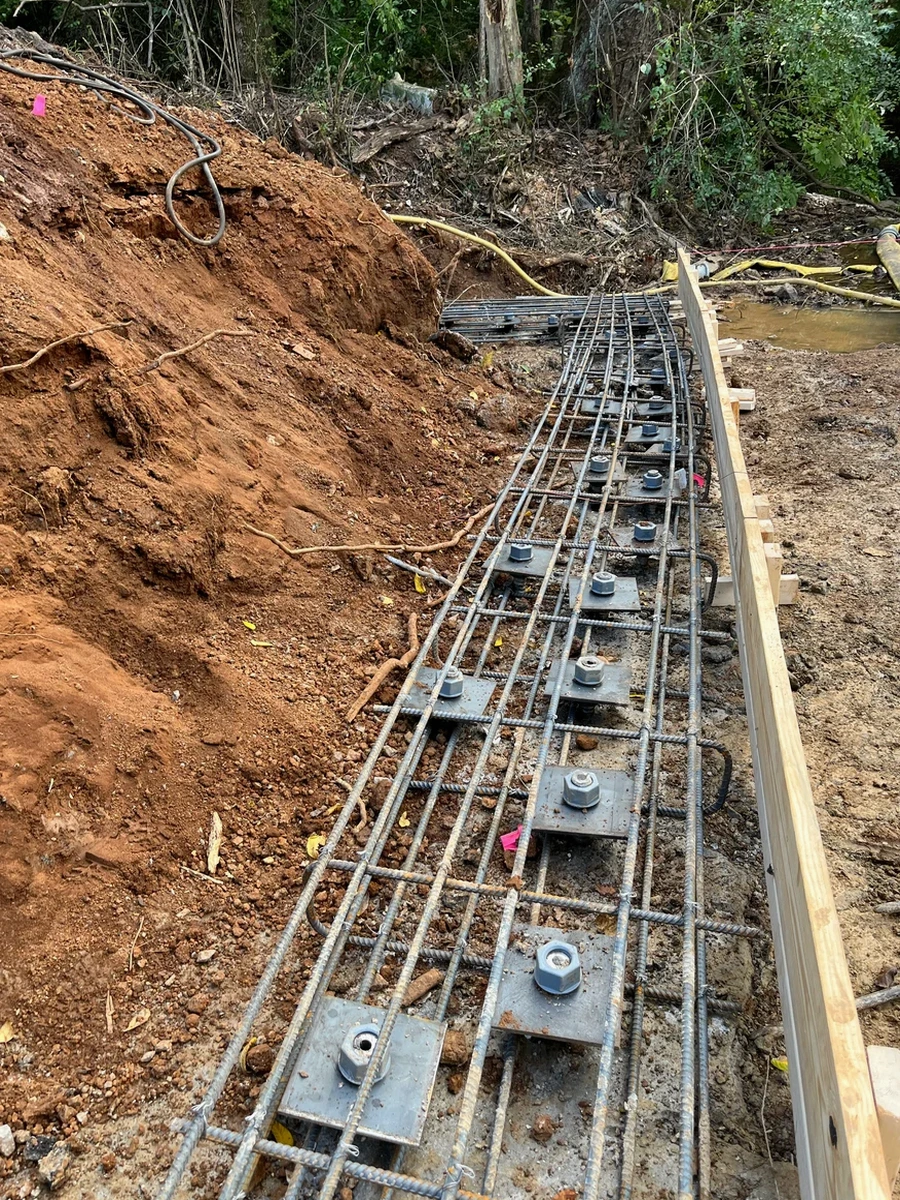
Illustrative image of Micropile design in Austin
A proper micropile design in Austin requires checking lateral load resistance, especially when used for seismic restraint under ASCE 7-22.

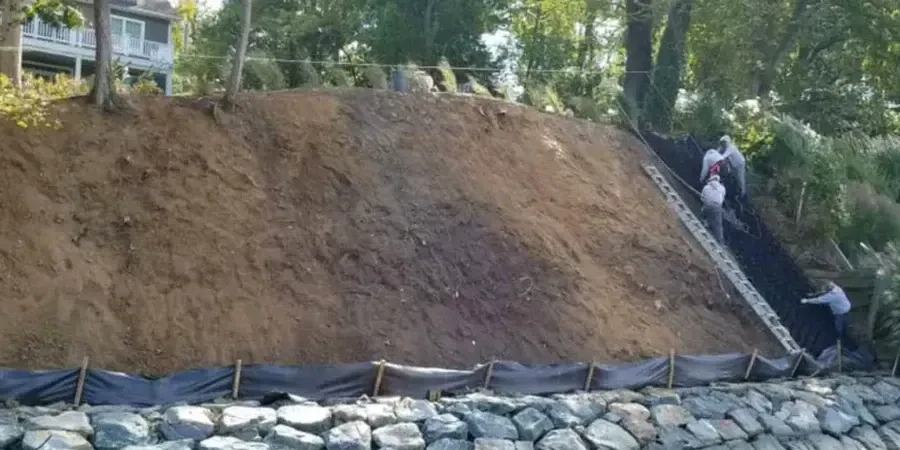
Our service areas

Process overview

Soil conditions in downtown Austin differ sharply from the suburban areas west of the Balcones Fault Zone. In the urban core, the clay is highly plastic (PI > 40) and rests on weathered limestone at depths between 15 and 40 feet. West Austin features shallow rock but variable karst cavities. For each site, the micropile design must account for the end-bearing component in rock and the skin friction in the clay. We typically run standard penetration tests at 5-foot intervals to capture the strength profile, and we use pressuremeter tests in the rock socket to calibrate the bond stress. A proper micropile design in Austin also requires checking the lateral load resistance, especially when the pile is used for seismic restraint under ASCE 7-22.
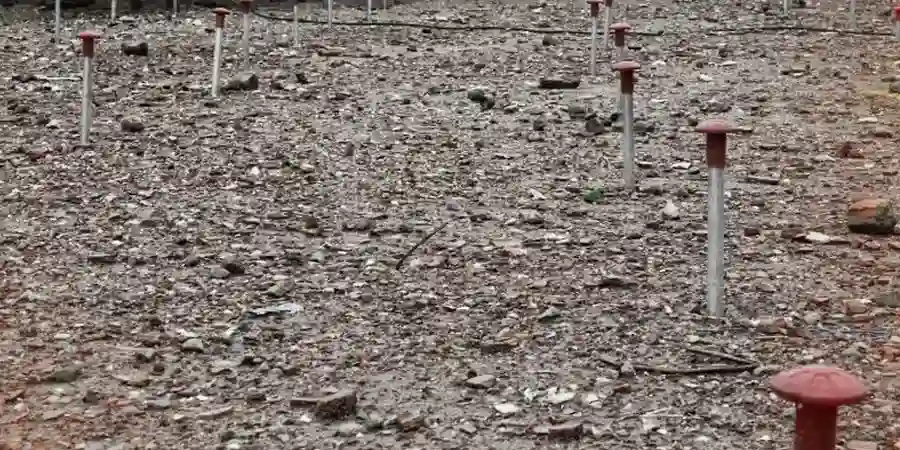
Technical reference — Austin

Local context

Austin’s rapid urbanization over the past two decades has pushed construction onto marginal parcels with variable geology. The city sits on the Edwards Aquifer recharge zone, where karst features can cause sudden loss of grout or casing collapse during micropile installation. If a cavity is not identified beforehand, the micropile design may underestimate the required rock socket length. We always run a pre-construction MASW survey to detect solution cavities before the rig mobilizes. The other major risk is heave from expansive clay. The micropile must be isolated from the slab with a void former or compressible wrap to prevent uplift. Ignoring this step has led to structural cracking in several Austin projects.

Need a geotechnical assessment?

Reply within 24h.

Email: contact@geotechnicalengineering1.com

Relevant standards


IBC 2021 (Section 1810 – Deep Foundations), ASCE 7-22 (Minimum Design Loads for Buildings), ASTM D1586-18 (Standard Penetration Test), ASTM D1143/D1143M-20 (Deep Foundation Load Test), FHWA-NHI-16-072 (Micropile Design and Construction)

Technical data

ParameterTypical value
Casing outer diameter7.0 – 9.625 in (178 – 244 mm)
Steel reinforcement gradeASTM A615 Grade 60 or 75
Grout compressive strength (28 d)≥ 5,000 psi (34.5 MPa)
Design bond stress (rock socket)100 – 250 psi (0.7 – 1.7 MPa)
Proof test load (compression)200% of design load per ASTM D1143
Maximum hole inclination1:6 (9.5 degrees from vertical)

FAQ


What is the typical depth of micropiles in Austin?

Most micropiles in Austin reach 30 to 60 feet below grade. The depth depends on the top-of-rock elevation of the Austin Chalk or Taylor Marl. In areas with deep clay fill, piles may extend up to 80 feet to reach competent bearing strata.

How much does micropile design cost in Austin?

The cost for a full micropile design package, including geotechnical investigation and load testing, typically ranges between US$1.690 and US$5.070 per project. This varies with site complexity, number of test piles, and required rock coring. Contact us for a firm quote.

Can micropiles be used for lateral load resistance?

Yes. A micropile group can resist lateral loads through batter piles or by relying on the passive resistance of the soil cap. For seismic applications in Austin, we design the cap-to-pile connection for a moment capacity per ACI 318-19 and ASCE 7-22.

What is the difference between a micropile and a drilled shaft?

Micropiles are smaller in diameter (7 to 12 inches) and are typically cased through the upper soil zone. They can be installed with low-headroom rigs and cause minimal vibration. Drilled shafts are larger (24 to 72 inches) and require more clearance. Micropiles are preferred for retrofit or restricted-access sites in Austin.

Do I need a special permit for micropile installation in Austin?

Yes. The City of Austin requires a foundation permit that references the geotechnical report and micropile design. If the site is within the Edwards Aquifer recharge zone, a Texas Commission on Environmental Quality (TCEQ) stormwater permit may also be needed. We handle the permitting coordination.

Location and service area

We serve projects across Austin.

Location and service area