AUSTIN US
AUSTIN
HomeSeismicMicrozonificación sísmica

Seismic Microzonation in Austin

Rigorous testing. Clear reporting.

LEARN MORE

Soils in downtown Austin’s urban core behave nothing like the deep clays along the Colorado River floodplain. That contrast is exactly why a one-size-fits-all seismic approach fails here. Our team has mapped response across both settings. For shallow limestone near the capitol we rely on resistivity surveys to detect bedrock depth. Over the alluvial deposits east of I-35 we deploy microtremor HVSR to capture fundamental frequency. Seismic microzonation in Austin must start with a clear picture of the local geology — not a generic code table.
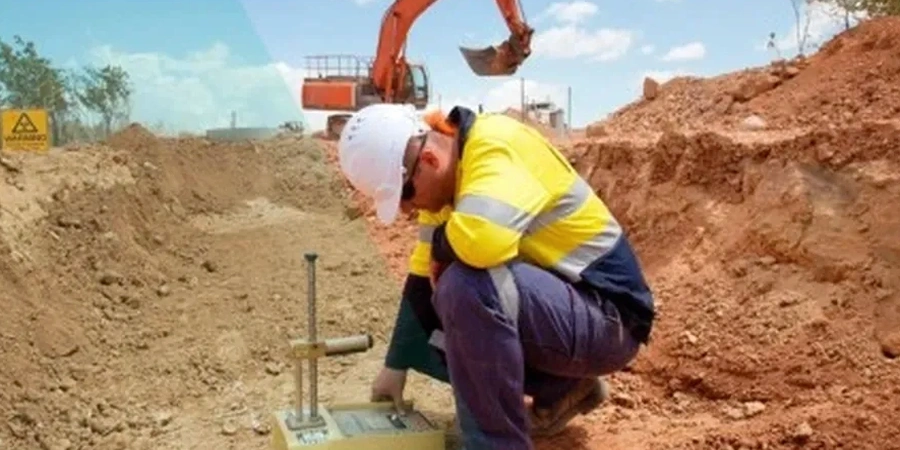
Illustrative image of Seismic microzonation in Austin
Without measured VS30 profiles, the IBC site class is just a guess. Seismic microzonation turns that guess into a defendable design basis.

Our service areas

Process overview

A common mistake we see: contractors pick a single site class from the IBC table without performing any field measurements. That shortcut ignores the 30-foot variability in soil stiffness across a single block in Austin. Proper seismic microzonation corrects this. We run multichannel analysis of surface waves (MASW) and cross-check with downhole testing to get real VS30 profiles. For soft clay zones near Lady Bird Lake we also incorporate soil improvement recommendations into the final hazard map. The result is a site-specific response spectrum, not a generic curve.
Technical reference — Austin

Local context

Austin sits in a region of moderate seismicity, but the real hazard comes from soil amplification. The deep clay layers along the Colorado River can amplify low-frequency shaking by a factor of 2 or more compared to nearby rock sites. That means two buildings 500 meters apart could experience completely different ground motions. Seismic microzonation quantifies that difference. We map the amplification factor across the city using a combination of MASW, HVSR, and 1D equivalent-linear analysis. Without that map, your structural engineer is designing blind.

Need a geotechnical assessment?

Reply within 24h.

Email: contact@geotechnicalengineering1.com

Relevant standards


ASCE 7-22 (Chapter 20 – Site Classification), IBC 2021 (Section 1613 – Seismic Design), ASTM D4428/D4428M (MASW testing), NEHRP Recommended Provisions (VS30 site class definitions)

Technical data

ParameterTypical value
VS30 range (m/s)180 – 760 (site class D to C)
Peak ground acceleration (PGA)0.10 – 0.25 g (ASCE 7-22)
Fundamental frequency (f0)2 – 8 Hz (microtremor HVSR)
Bedrock depth5 – 40 ft (resistivity + borings)
Liquefaction potential (SPT-based)Low to moderate (Youd-Idriss 2001)

FAQ


What is the difference between a seismic microzonation and a standard geotechnical report?

A standard geotechnical report provides soil bearing capacity and settlement. Seismic microzonation focuses exclusively on ground motion amplification, site period, and liquefaction potential. It delivers a site-specific response spectrum that replaces the default IBC curve.

How much does seismic microzonation cost in Austin?

For a typical commercial project in Austin, the cost ranges between US$3,690 and US$17,650 depending on the number of MASW lines, HVSR stations, and the depth of the liquefaction assessment. Contact us for a scope-specific quote.

Does Austin require seismic microzonation for all buildings?

No. The IBC requires site-specific ground motion analysis only for Seismic Design Categories D, E, and F or for structures with a period above 1.5 seconds. However, many owners choose microzonation voluntarily to reduce construction costs through optimized foundation design.

What field methods do you use for seismic microzonation?

We use multichannel analysis of surface waves (MASW) for VS30 profiling, passive microtremor arrays (HVSR) for site period, and SPT borings for liquefaction assessment. All work follows ASTM D4428 and D1586 procedures.

Location and service area

We serve projects across Austin.

Location and service area