AUSTIN US
AUSTIN
HomeFoundationsDifferential Settlement Analysis in Austin | Geotechnical...

Differential Settlement Analysis in Austin | Geotechnical Expertise for Central Texas

Rigorous testing. Clear reporting.

LEARN MORE

Austin's geology is dominated by the Taylor Group and Ozan formations, which yield high-plasticity clays with plasticity indexes often exceeding 50. These soils undergo significant volumetric change with moisture variation, making differential settlement analysis a non-negotiable step for any slab-on-grade or shallow foundation. We see shrink-swell movements of 2 to 4 inches seasonally across neighborhoods like Mueller and Circle C, where the transition from the Balcones Escarpment to the Blackland Prairie creates abrupt changes in soil behavior. For projects in these zones, our team integrates a grouting program to stabilize loose pockets before load application, ensuring the foundation design accounts for actual subsurface conditions.
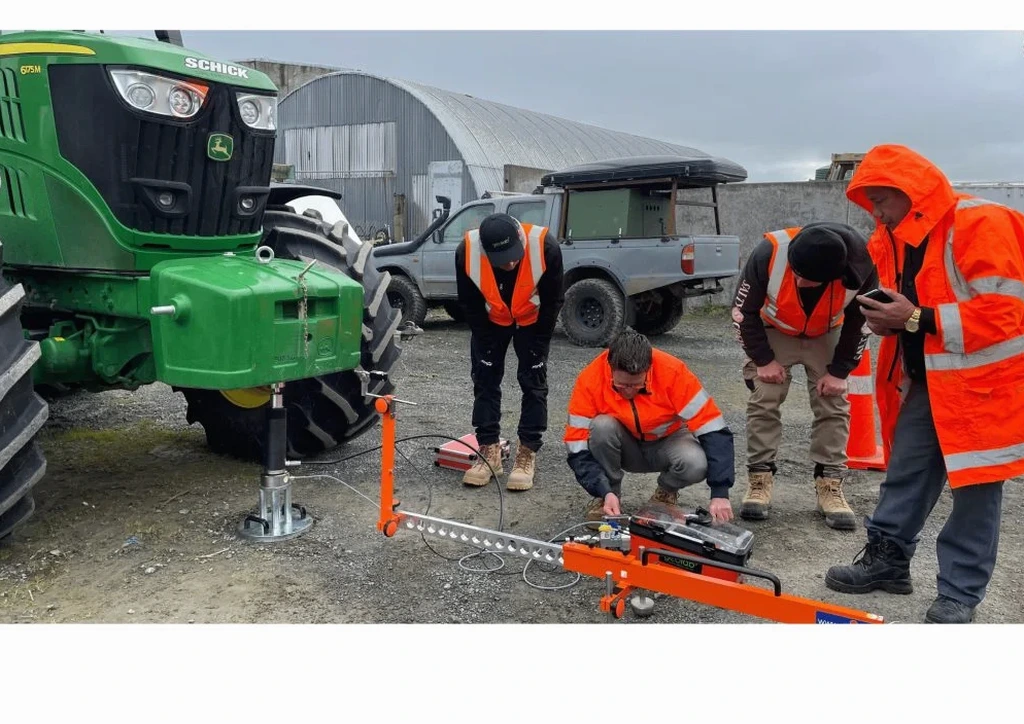
Illustrative image of Differential settlement analysis in Austin
In Austin's clay-shale sequences, total settlements of 1 to 3 inches and differential movements of 0.5 to 1.5 inches are common without proper subsurface characterization.

Our service areas

This service complements our laboratory testing work for a complete project analysis.

Process overview

A common mistake contractors make in Austin is assuming uniform soil conditions across a single lot. We frequently find that one corner of a building pad sits on weathered limestone while the other lies on deep expansive clay. Our approach to differential settlement analysis involves sequential field and lab testing: we drill borings to at least 30 feet depth, perform SPT with hammer energy calibration per ASTM D1586-18, and retrieve undisturbed tube samples for consolidation testing. The lab phase includes oedometer tests under incremental loads and determination of the compression index Cc and recompression index Cr.
  • One-dimensional consolidation per ASTM D2435
  • Swelling pressure tests on undisturbed specimens
  • Time-rate settlement curves for primary and secondary compression
We cross-reference these results with the limits Atterberg to classify soil expansiveness and estimate heave potential. This data drives the foundation design recommendations, whether it calls for drilled piers bearing on competent strata or a post-tensioned slab with stiffened beams.
Technical reference — Austin

Local context

The combination of semi-arid summers and torrential spring rains in Austin creates cyclic wet-dry cycles that aggressively attack clay subgrades. A foundation that passes inspection in July may develop differential settlement by the following February if the soil's moisture regime shifts. We've documented cases where unmonitored fill placement over weathered shale caused 2 inches of differential movement within 18 months. To mitigate this, our differential settlement analysis includes long-term moisture monitoring recommendations and the use of moisture barriers, surface drainage grading, and sometimes deep soil mixing to reduce swell potential. Ignoring these factors leads to cracked slabs, misaligned doors, and costly repairs that outweigh the upfront investigation by a factor of ten.

Need a geotechnical assessment?

Reply within 24h.

Email: contact@geotechnicalengineering1.com

Visual overview


Relevant standards

ASTM D1586-18 (Standard Test Method for Standard Penetration Test), ASTM D2435-04 (Standard Test Methods for One-Dimensional Consolidation of Soils), IBC 2021 Chapter 18 (Soils and Foundations), ASCE 7-22 Minimum Design Loads and Associated Criteria

Technical data


ParameterTypical value
Plasticity Index (PI)30–65 (expansive clays)
Swelling Pressure (psf)2,000–8,000
Compression Index (Cc)0.20–0.55
Recompression Index (Cr)0.02–0.08
Coefficient of Consolidation (cv) cm²/s0.001–0.02
Allowable Bearing Capacity (psf)1,500–4,000 depending on depth and rock presence

FAQ

What is the difference between total settlement and differential settlement?

Total settlement is the overall downward movement of a foundation relative to its original elevation. Differential settlement is the relative movement between two points on the same foundation, which causes structural distortion. In Austin's expansive soils, differential settlement is the more critical parameter because it directly affects serviceability.

How much does a differential settlement analysis cost in Austin?

For a typical residential or small commercial project, the cost ranges between US$820 and US$1,930. The variation depends on the number of borings, depth of exploration, and whether consolidation testing is required. We provide a fixed-price quote after reviewing the site plan and structural loads.

At what stage of the project should I order a differential settlement study?

Ideally during the pre-design phase, before slab or footing drawings are finalized. In Austin, we recommend ordering the study after site grading is complete but before foundation permits are submitted. This allows us to incorporate actual soil conditions into the structural design and avoid expensive redesigns later.

Location and service area

We serve projects across Austin.

Location and service area