AUSTIN US
AUSTIN
HomeSlopes & WallsSlope Stability Analysis

Slope Stability Analysis in Austin – Geotechnical Lab Services

Rigorous testing. Clear reporting.

LEARN MORE

Austin sits on a mix of expansive clay over limestone bedrock, a combination that demands rigorous slope stability analysis. We follow FHWA-NHI-05 methods and ASCE 7 seismic provisions to assess both short-term and long-term failure risk. The team runs limit equilibrium models using Spencer and Bishop routines, calibrated with local soil parameters from test pits and SPT logs. For fills along the Colorado River terraces, we also check undrained shear strength via a veleta de campo to get real-time field data. Every analysis includes pore-pressure assumptions tied to Austin's wet-dry seasonal cycle.
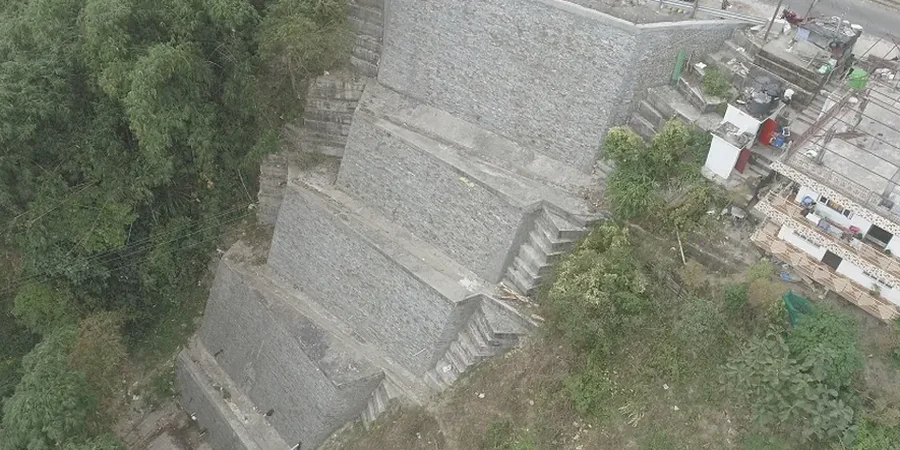
Illustrative image of Slope stability analysis in Austin
Austin's seasonal wet-dry cycle can reduce clay shear strength by up to 40 percent between summer and winter months.

Our service areas

Process overview

Soils in West Austin near the Balcones Escarpment behave very differently from those in the eastern alluvial plains. In the west, we see shallow limestone with thin clay covers; failure surfaces tend to be planar and controlled by joint orientation. East of I-35, deep clay deposits dominate, with circular failure mechanisms and high plasticity. We run both infinite slope and Bishop simplified methods depending on the geometry. For road cuts along MoPac and SH 45, we also incorporate respuesta sismica to account for peak ground acceleration during seismic events. Each model uses site-specific phi and cohesion values from direct shear tests on undisturbed samples.
Technical reference — Austin

Local context

A common mistake among Austin developers is assuming that a slope that held for one dry winter will hold through a wet spring. We have seen cuts fail after just two weeks of heavy rain because the contractor skipped pore-pressure monitoring. Without proper slope stability analysis, the factor of safety can drop from 1.5 to under 1.0 as clay saturates. The result is a slip surface that takes out retaining walls, sidewalks, and sometimes the foundation itself. We always model worst-case wet-season conditions, not the dry snapshot.

Need a geotechnical assessment?

Reply within 24h.

Email: contact@geotechnicalengineering1.com

Relevant standards


FHWA-NHI-05 (Slope Stability Reference Manual), ASCE 7-22 (Minimum Design Loads, Section 11.8 Seismic), ASTM D3080 (Direct Shear Test)

Technical data

ParameterTypical value
Factor of Safety (static)1.5 (IBC minimum)
Factor of Safety (seismic)1.1 (ASCE 7)
Peak ground acceleration (PGA)0.10 g (Austin average)
Clay cohesion range0.2 to 0.8 ksf
Internal friction angle (residual)18 to 28 degrees

FAQ


How much does a slope stability analysis cost in Austin?

A typical slope stability analysis for a single section in Austin ranges from US$1.220 to US$4.500. The variation depends on slope height, number of failure surfaces modeled, and whether seismic loading is required.

What is the minimum factor of safety required by Austin city code?

Austin generally follows IBC 2021, which requires a minimum factor of safety of 1.5 for static conditions and 1.1 for seismic pseudo-static conditions for new slopes and cuts.

Do I need a slope stability study for a small backyard retaining wall?

For walls under 4 feet in height on flat ground, most jurisdictions do not require it. However, if the wall retains a cut or fill slope, or is built on Austin clay, we recommend at least a simplified analysis to avoid future movement.

How does Austin's expansive clay affect slope stability results?

Expansive clay in Austin can lose cohesion when wet and shrink when dry, creating tension cracks. These cracks become water pathways that reduce the factor of safety significantly during rainy months.

Location and service area

We serve projects across Austin.

Location and service area