AUSTIN US
AUSTIN
HomeSeismicSite Response Analysis

Site Response Analysis in Austin: Why Builders Get It Wrong Without It

Rigorous testing. Clear reporting.

LEARN MORE

Many construction teams in Austin skip the site response analysis and rely on generic seismic coefficients from the code. That is a mistake. The Balcones Fault zone runs straight through the city, creating a sharp contrast between hard limestone on the west side and deep alluvial clays on the east. A one-size-fits-all design does not work here. Without a proper site-specific study, buildings on soft soils can amplify ground motion by a factor of two or more. The result is an under-designed structure that may not perform during a moderate earthquake. A thorough site response analysis captures the actual soil column behavior, not a table value from Appendix C of ASCE 7.
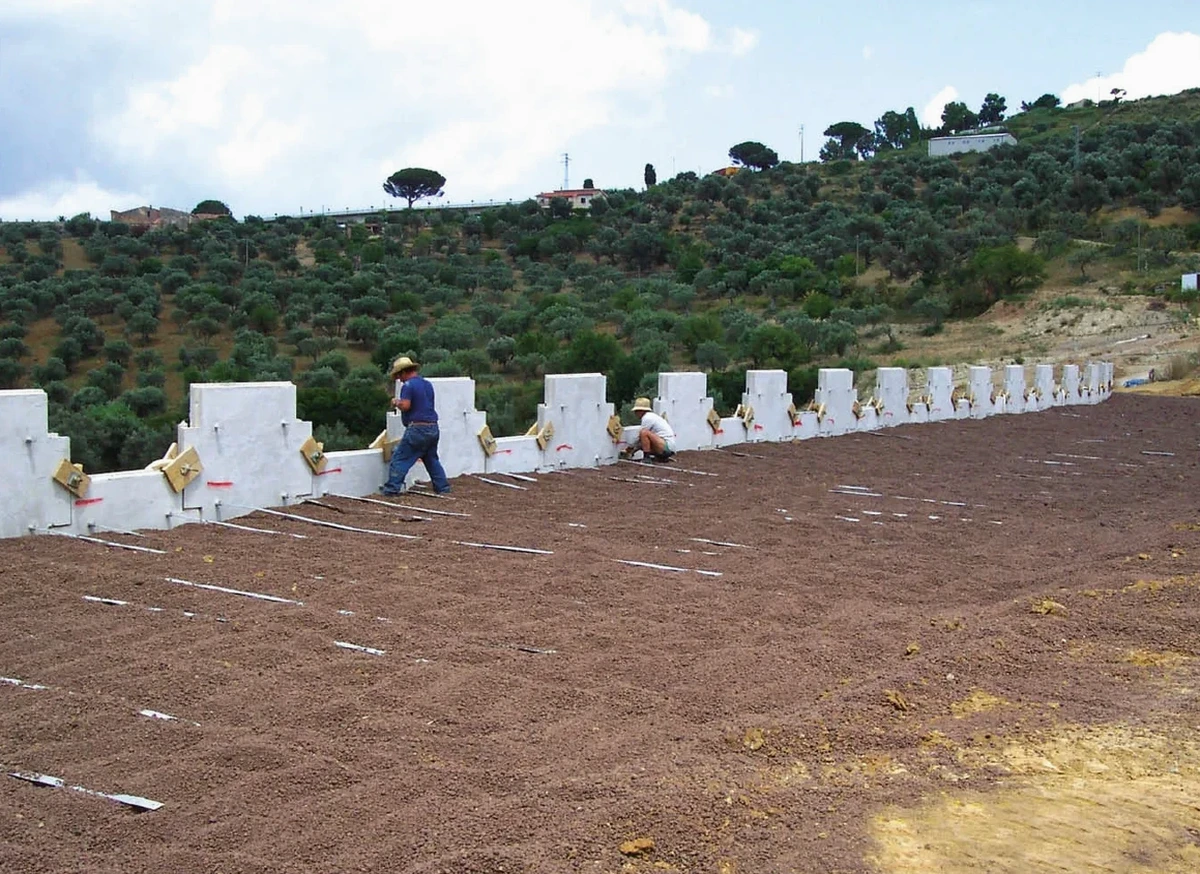
Illustrative image of Site response analysis in Austin
On the east side of Austin, soft soils can amplify seismic waves 2.5 times more than the limestone ridges west of MoPac.

Our service areas

Process overview

Austin's climate alternates between drought and intense storms, which changes soil moisture content dramatically. That moisture shift alters the shear wave velocity profile over time. A single dry-season measurement can underestimate the site period during wet conditions. The analysis must account for seasonal variability.
  • We combine downhole seismic testing and microtremors HVSR to capture the fundamental site frequency.
  • For projects on the Colorado River terraces, we also run pressuremeter tests to measure in-situ modulus degradation.
  • When the site has thin soil over rock, we use ground penetrating radar (GPR) to map the bedrock interface precisely.
Each method feeds into a 1-D equivalent-linear or nonlinear deformation analysis per ASCE 7-22 Section 21.
Technical reference — Austin

Local context

Compare two Austin neighborhoods: the limestone hills of Westlake Hills versus the deep clay floodplains of Dove Springs. On the west side, a site response analysis might show amplification factors near 1.0 — the rock transmits motion directly. On the east side, the same bedrock motion can be amplified 2.5 times through 30 meters of soft clay and silt. That difference means the east-side building needs a completely different lateral system. Many engineers assume the whole city falls under site class D. They are wrong. A site-specific analysis reveals the real site class and prevents either overdesign or unsafe underdesign.

Need a geotechnical assessment?

Reply within 24h.

Email: contact@geotechnicalengineering1.com

Relevant standards


ASCE 7-22 (Section 21: Site-Specific Ground Motion Procedures), NEHRP Provisions (BSSC 2020, Site Class definitions A–F), ASTM D4428/D4428M (Crosshole seismic testing for Vs)

Technical data

ParameterTypical value
Vs30 (average shear wave velocity to 30 m)180 – 760 m/s depending on site class
Fundamental site period (T₀)0.2 – 1.8 seconds
Peak ground acceleration (PGA) at bedrock0.05 – 0.15 g (ASCE 7-22 MCEᵣ)
Amplification factor (Fa, Fv)0.9 – 2.5 per NEHRP site class
Strain-compatible modulus (G/Gmax)Darendeli (2001) curves, site-specific
Liquefaction triggering thresholdCRR vs CSR per Youd-Idriss 2001

FAQ


What is the difference between a site response analysis and a standard seismic design per ASCE 7?

A standard seismic design uses generic site class and spectral acceleration values from ASCE 7 tables. A site response analysis uses site-specific shear wave velocity profiles, strain-compatible soil properties, and actual ground motion inputs to compute the response spectrum at the ground surface. It captures soil amplification and frequency shifting that code tables miss.

How much does a site response analysis cost in Austin?

The typical cost ranges from US$1.180 to US$4.280 depending on the number of test borings, depth of profiling, and whether laboratory cyclic testing is required. A basic analysis using existing Vs data is on the lower end. A full program with downhole seismic and cyclic triaxial testing is on the higher end.

Which Austin soil types require the most careful site response analysis?

The deep clay deposits along the Colorado River floodplain (site class E) require the most attention. These soils have low shear wave velocities (below 180 m/s) and high strain-sensitivity. They can amplify long-period motions that affect mid-rise and high-rise structures. The limestone hills (site class B/C) generally need only a simplified check.

When should I order a site response analysis instead of using code-default values?

You need a site-specific analysis for Risk Category III or IV structures, buildings taller than 10 stories, projects on soft soils (site class E or F), or any site where the code-default amplification factors are unconservative. Many Austin projects on the east side benefit from the analysis even for Category II buildings because the code overestimates or underestimates the real demand.

Location and service area

We serve projects across Austin.

Location and service area