AUSTIN US
AUSTIN
HomeRoadwayVial (diseño pavimentos/subrasante)

Road Geotechnics – Pavement & Subgrade Design in Austin

Rigorous testing. Clear reporting.

LEARN MORE

We roll a pneumatic drill rig up to the site, mount a Shelby tube sampler, and pull undisturbed cores from the subgrade. In Austin, the soil profile can shift from high-plasticity clay (CH) to silty sand (SM) within 50 feet, so we take samples at 1.5-m intervals. Each core goes straight to the lab for moisture-density curves and CBR swell testing. We run the Modified Proctor (ASTM D1557) on every pavement section to get the dry density target. Before we set the compaction spec, we also run a CBR test to estimate the subgrade modulus for the flexible pavement layers.
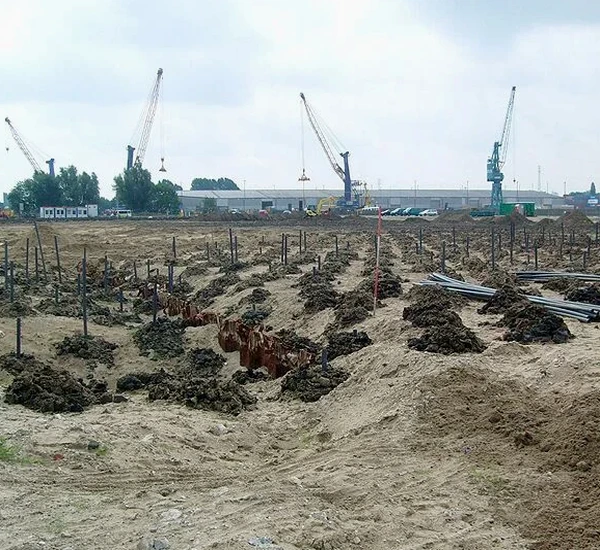
Illustrative image of Road geotechnics (pavement/subgrade design) in Austin
For fat clays with PI > 30, lime treatment is standard before placing the base course. We verify with soaked CBR at 4 days.

Our service areas

Process overview

A typical Austin roadway project starts with a TxDOT-designated soil survey. We dig test pits at 300-ft spacing along the alignment and log each layer by USCS (ASTM D2487). The high-plasticity clays here—often lean clay (CL) or fat clay (CH)—require a stabilisation plan. We take bulk samples for Atterberg limits and natural moisture content. If the PI exceeds 30, we recommend lime or cement treatment. For the base course, we run a Proctor compaction test to set the optimum moisture and maximum dry density. Then we soak CBR specimens for 96 hours to simulate wet-season conditions under the pavement.
Technical reference — Austin

Local context

In Austin, many developers underestimate the shrink-swell potential of the Eagle Ford Shale formation. When the subgrade dries out after compaction, it cracks and loses support. We have seen pavement sections fail within two years because the design CBR was based on dry-season sampling only. The real risk is differential heave under the pavement joints. We always run a swell test on the compacted specimen at 50 psf seating load. If the swell exceeds 2%, we recommend a stabilised subbase or a geotextile separation layer.

Need a geotechnical assessment?

Reply within 24h.

Email: contact@geotechnicalengineering1.com

Relevant standards


ASTM D1557 – Modified Proctor (moisture-density), ASTM D1883 – CBR (California Bearing Ratio), ASTM D4318 – Atterberg Limits, TxDOT Tex-113-E – Triaxial Classification for Soils

Technical data

ParameterTypical value
Maximum Dry Density (Modified Proctor)1.8 – 2.2 t/m³ at OMC
Soaked CBR (4-day immersion)2 – 15 for subgrade; >80 for base
Plasticity Index (PI) of subgrade clay15 – 45 typical in Austin
Liquid Limit (LL) of clay layers35 – 65
Natural Moisture Content (NMC)12 – 28% depending on season

FAQ


What is the typical cost range for road geotechnics testing in Austin?

For a standard roadway section (2,000-5,000 ft), the package including test pits, Modified Proctor, CBR, and Atterberg limits runs between US$940 and US$4,660. The exact amount depends on the number of test locations and the complexity of the soil profile.

How does Austin's clay soil affect pavement design compared to sandy soils?

Austin clays (CH/CL) have high plasticity and can swell up to 6% when wet. The TxDOT design method requires a soaked CBR test, not just a dry one. Sandy soils drain faster and have lower swell potential, so the CBR values are usually higher and more consistent.

When should I use lime stabilisation versus cement stabilisation for the subgrade?

Lime works best on high-plasticity clays (PI > 30) because it reduces plasticity and improves workability. Cement is better for silty or sandy subgrades (PI < 15) because it provides faster strength gain. We run a laboratory mix design to determine the optimal binder content.

Location and service area

We serve projects across Austin.

Location and service area